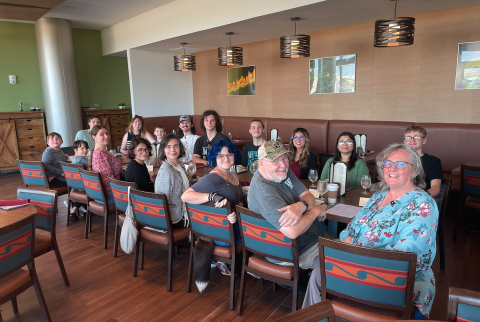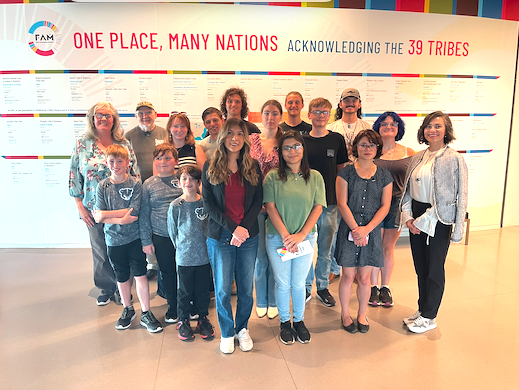
Seventeen Northeast Texas Community College members of the Phi Theta Kappa Honor Society and the Work4College program recently traveled to Oklahoma City for an immersive field study connecting regional archaeology, living Indigenous history, and modern civic resilience. Supported by a grant from the Moody Foundation, the excursion provided students with experiential research opportunities directly tied to NTCC’s extensive Caddo pottery collection.
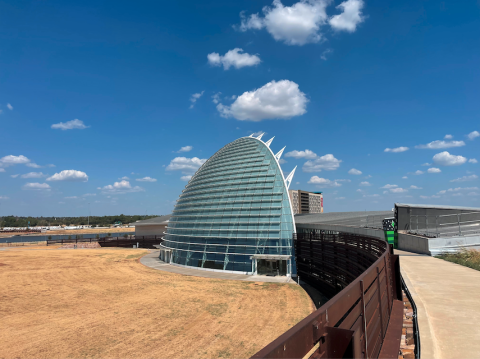
Opened in 2021, the First Americans Museum (FAM) celebrates the collective histories, arts, and cultures of the 39 distinct tribal nations headquartered in Oklahoma today. From the moment students arrived to a personalized welcome sign noting “Northeast Texas Community College, Phi Theta Kappa,” the institution’s architecture set a contemplative tone. The entrance is framed by the Remembrance Gate, which features two 40-foot inclining walls of Mesquabuck stone in honor of Potawatomi Chief Mes'kwah-buk. Visitors then enter the Hall of the People, a soaring glass semi-dome inspired by traditional Wichita grass houses and supported by ten stone columns. Each column symbolizes the grueling ten miles traveled per day by Indigenous peoples during forced removal to Indian Territory.
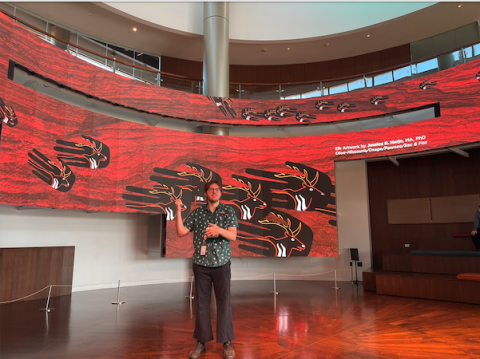
Inside the first-floor OKLA HOMMA gallery, students walked through a comprehensive chronicle of tribal origins, forced relocation, and contemporary community life. The exhibit pairs native animation, oral histories, and interactive technology with historical artifacts. On the second floor, the group explored WINIKO: Life of an Object, an exhibition developed in collaboration with the Smithsonian’s National Museum of the American Indian and tribal Knowledge Keepers. The installation showcases 76 historical objects collected during the nineteenth century alongside contemporary works, highlighting cultural reclamation and the repatriation of family heirlooms.
For NTCC students, the visit bridged textbook research with regional heritage. Behind the museum, students climbed a massive earthen mound built in tribute to ancient mound-builder civilizations. Because Northeast Texas was historically home to the mound-building Caddo people, the site provided a tangible visual link to the ancient Caddo pottery preserved back on campus. The cultural immersion extended through lunch at the museum's Thirty-Nine Restaurant, where students sampled Indigenous-inspired cuisine, including bison burgers, frybread tacos, and chipaeesiihooni aapoikooni (pumpkin seed mole).
Before concluding the trip, the group paid their respects at the Oklahoma City National Memorial, which honors the victims, survivors, and rescuers of the April 19, 1995 bombing. The visit carried unique significance for the students, as PTK member and active first responder Matthew Zamutt helped lead a discussion on how the tragedy permanently reshaped emergency response protocols, crisis communication, and community support systems nationwide.
By taking learning beyond classroom walls, NTCC continues to provide students with rich historical context, cultural perspective, and real-world leadership insight.